Nutrition
What Should You Eat Before and After a Workout?
Practical guidance on protein, carbohydrates, hydration, and everyday meal ideas that can support training and recovery.
You know what workout you are doing.
Now comes another common question:
What should I eat?
Should you eat immediately before training?
Should you train on an empty stomach?
Do you need protein right after?
What about carbohydrates?
The truth is that there is no single pre-workout or post-workout meal that everyone has to eat.
Your total nutrition throughout the day matters.
But what you eat around your training can still help support energy, performance, recovery, and your overall fitness goals.
What Is the Goal of a Pre-Workout Meal?
Your pre-workout food should help you arrive at training with enough energy to perform.
For many people, that means some combination of:
- Carbohydrates
- Protein
- Fluids
Carbohydrates are an important fuel source for exercise, and sports-nutrition guidance recognizes strategic carbohydrate intake before, during, and after demanding exercise as useful for supporting energy availability and recovery.
The exact meal depends on:
- When you are training
- What you ate earlier
- Workout duration
- Workout intensity
- Your goals
- Your digestive tolerance
You Do Not Need a Special Pre-Workout Food
There is no food that suddenly becomes magical because you eat it before lifting weights.
A normal meal can work.
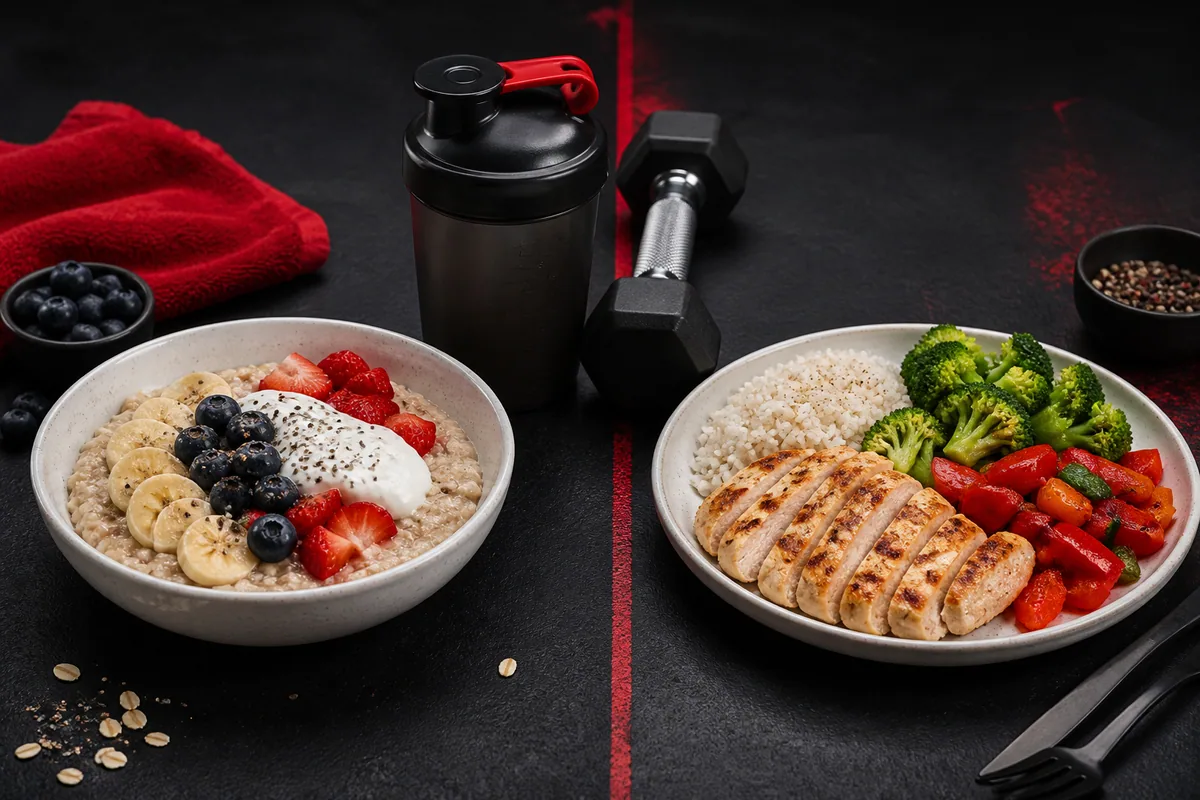
For example:
- Chicken and rice
- Eggs and toast
- Oatmeal with a protein source
- Greek yogurt with fruit and granola
- Turkey sandwich and fruit
The goal is simply providing your body with useful nutrition before training.
How Close to the Workout Should You Eat?
This varies.
Some people can comfortably eat a full meal relatively close to their workout.
Others feel heavy or uncomfortable.
A practical approach is:
More time before training
You may tolerate a larger, balanced meal.
Less time before training
You may prefer something smaller and easier to digest.
Listen to your body.
If a huge meal immediately before your workout makes you feel terrible every time, that is useful information.
Adjust.
What About Carbohydrates Before Training?
Carbohydrates can provide readily available fuel for training.
Examples include:
- Rice
- Oatmeal
- Bread
- Potatoes
- Fruit
- Pasta
- Cereal
- Other carbohydrate-rich foods
How much you need depends on your total diet and the type of training you are doing.
A long endurance session and a short resistance-training workout do not necessarily create the same fueling needs.
Keep the context in mind.
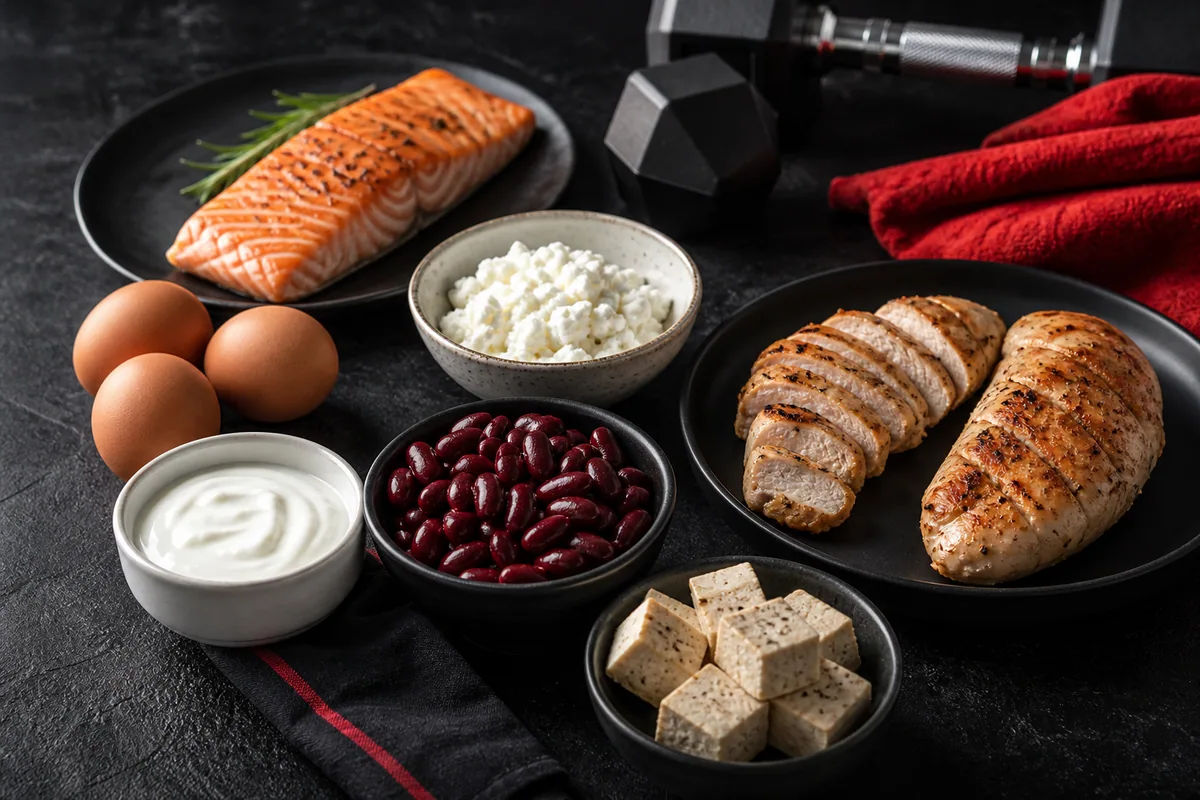
What About Protein Before Training?
Protein can also be part of your pre-workout meal.
Examples:
- Chicken
- Turkey
- Eggs
- Greek yogurt
- Cottage cheese
- Fish
- Lean beef
- Tofu
- Protein shake
You do not need to consume protein at the exact second you begin exercising.
The larger goal is getting enough across the day.
For a deeper breakdown, read How Much Protein Do You Need to Build Muscle?.
Should You Avoid Fat Before Training?
Fat is part of a balanced diet.
You do not need to fear it.
But large, heavy meals may take longer to digest and can feel uncomfortable for some people if eaten immediately before exercise.
Your tolerance matters.
The closer you are to training, the more useful it becomes to choose foods you already know sit well with you.
Workout day is usually not the best time to experiment with a giant unfamiliar meal.
Do You Have to Eat Before Every Workout?
No.
Your meal timing depends partly on your schedule.
Someone training first thing in the morning may approach food differently from someone training several hours after lunch.
If you train comfortably without a meal immediately beforehand and your overall nutrition is adequate, you do not necessarily need to force yourself to eat simply because someone online told you to.
However, if you consistently feel weak, lightheaded, or unable to perform well, your fueling strategy deserves another look.
Persistent or concerning symptoms should be discussed with an appropriate healthcare professional.
What Should You Eat After a Workout?
After training, think about:
Recovery and the rest of your day.
A balanced post-workout meal can include:
- Protein
- Carbohydrates
- Fluids
- Other foods that contribute to your overall nutrition
Protein helps contribute toward your daily protein needs.
Carbohydrates can help replenish carbohydrate stores used during exercise, particularly when training volume is substantial. Research on nutrient timing has long recognized protein-plus-carbohydrate strategies around training as useful in certain exercise contexts.
You do not need a special branded recovery food.
Normal food works.
Simple Post-Workout Meal Ideas
Chicken + rice + vegetables
Protein, carbohydrates, and a balanced meal.
Turkey sandwich + fruit
Simple and portable.
Eggs + toast + fruit
Useful if you train earlier in the day.
Greek yogurt + granola + fruit
A convenient option when you do not want a full meal immediately.
Protein shake + another carbohydrate source
Convenient when you are busy.
These are examples - not mandatory meals.
Do You Need a Protein Shake Immediately After?
No.
A shake is convenient, but there is no emergency countdown where all your progress disappears if you do not drink one immediately.
Research examining protein timing suggests that total daily intake and the context of meals surrounding training matter more than treating the post-workout period as a tiny all-or-nothing window.
If a shake fits your routine, great.
If you would rather eat a normal meal, that works too.
Do Not Forget Hydration
Water matters before, during, and after training.
How much fluid you need varies based on factors such as:
- Exercise duration
- Exercise intensity
- Temperature
- Sweat rate
- Body size
- Environment
ACSM's current personal-training educational standards specifically recognize maintaining hydration before, during, and after exercise as an important fitness consideration.
For most normal gym sessions, bringing water and drinking according to your needs is a simple place to start.
What About Sports Drinks?
You do not automatically need a sports drink just because you exercised.
For many normal workouts, water can be completely adequate.
Longer, harder, or high-sweat activities can create different fueling and electrolyte considerations.
Again, context matters.
Do not assume every 45-minute gym session requires a bottle full of sugar and electrolytes.
What Matters More: Meal Timing or the Whole Day?
The whole day.
Meal timing can help.
But it cannot rescue an otherwise inconsistent diet.
If you perfectly time one post-workout meal but barely eat enough protein or total food for the rest of the day, you are focusing on a small detail while ignoring the bigger picture.
Prioritize:
- Consistent overall nutrition
- Adequate food for your goal
- Adequate protein
- Hydration
- Meals around training that help you perform and recover
Then worry about small optimizations.
What If Your Goal Is Muscle Gain?
Your pre- and post-workout meals should fit into a day of eating that supports muscle gain.
Read Why You're Working Out but Not Gaining Muscle and How Much Protein Do You Need to Build Muscle?.
Training and nutrition need to support the same goal.
What If Your Goal Is Fat Loss?
You still need nutrition that supports your training.
Fat loss does not mean starving before or after exercise.
Your overall calorie balance matters, while protein, nutritious foods, and resistance training can remain important parts of the bigger strategy.
Avoid extreme approaches.
Sustainable progress matters.
Keep It Simple
Before your workout:
Fuel yourself enough to train well.
After your workout:
Eat in a way that supports recovery and the rest of your nutrition plan.
Throughout the day:
Stay consistent.
You do not need a magical meal.
You need a nutrition routine that supports what you are trying to accomplish.
Continue Learning
Read How Much Protein Do You Need to Build Muscle?, Why You're Working Out but Not Gaining Muscle, and How to Start Working Out: A Beginner's Guide.
Sources & Further Reading
- International Society of Sports Nutrition Position Stand: Nutrient Timing, Journal of the International Society of Sports Nutrition
- The Effect of Protein Timing on Muscle Strength and Hypertrophy: A Meta-Analysis, Journal of the International Society of Sports Nutrition
- ACSM Certified Personal Trainer Exam Content Outline, American College of Sports Medicine