Mobility & Recovery
Should You Stretch Before or After Your Workout?
Learn when to use dynamic movement, static stretching, warm-ups, and flexibility work before or after training.
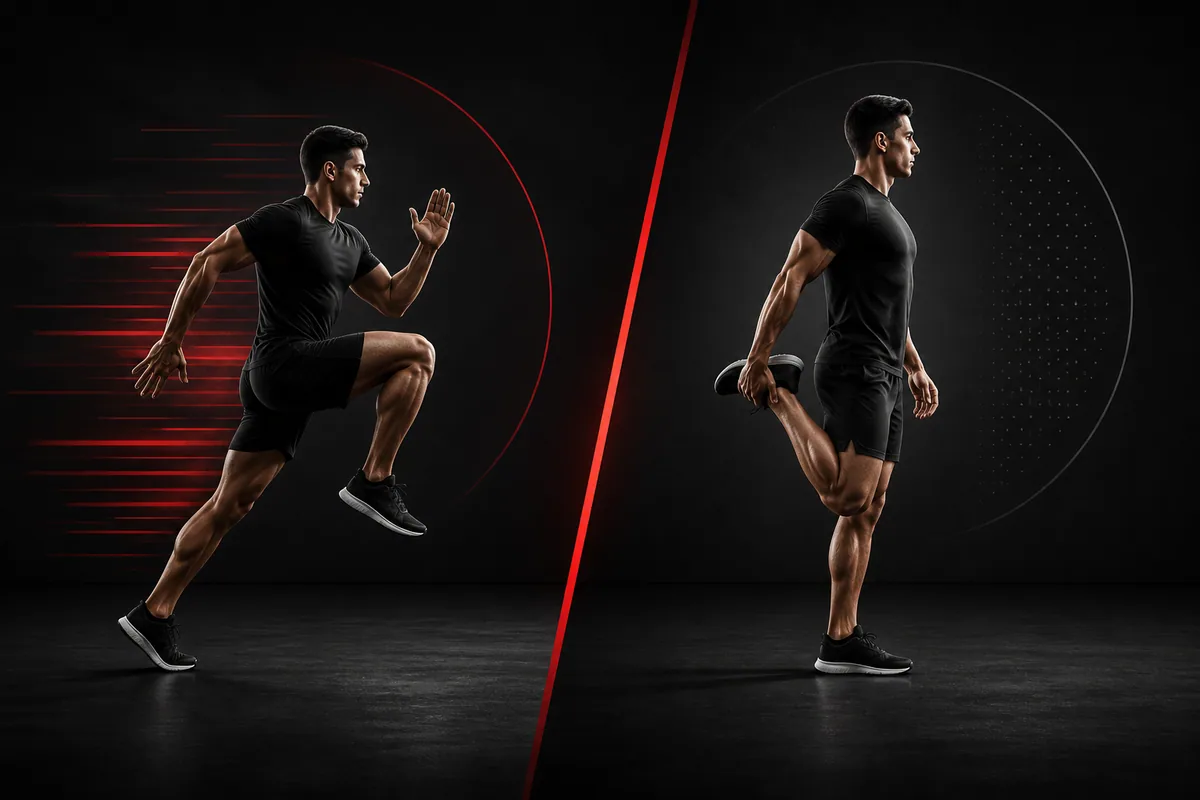
Should you stretch before your workout?
After?
Both?
This gets confusing because people use the word stretching to describe different things.
The answer becomes much easier once you separate:
warming up
from:
static flexibility work.
They are not the same thing.
Before Your Workout: Prepare to Move
Before training, your main goal should be preparing your body for the activity you are about to perform.
That may include:
- Light activity
- Dynamic movements
- Mobility movements
- Exercise-specific warm-up sets
Instead of immediately holding long, relaxed stretches, think:
movement preparation.
You are gradually transitioning from whatever you were doing before the gym into harder physical activity.
What Is Dynamic Stretching?
Dynamic stretching uses controlled movement.
Examples include:
- Arm circles
- Leg swings
- Walking lunges
- Hip circles
- Controlled torso rotations
You move through the stretch rather than holding one position.
Dynamic movements can fit naturally into a pre-workout warm-up because you are preparing to move.
What About Static Stretching Before a Workout?
Static stretching involves moving into a stretch and holding the position.
If your goal is a general strength or endurance workout, static flexibility work usually fits more naturally once your muscles are already warm.
The American Heart Association currently recommends performing flexibility exercises when muscles are warm and states that people doing endurance or strength exercise can perform their stretching afterward rather than using static stretching as the primary pre-workout preparation.
That does not mean static stretching is somehow bad.
It simply has a different purpose from warming up for a workout.
After Your Workout: Work on Flexibility if You Want To
After your workout, your body is already warm.
That can be a convenient time to perform static flexibility work.
Examples might include:
- Hamstring stretch
- Quadriceps stretch
- Calf stretch
- Hip-flexor stretch
- Chest stretch
- Shoulder stretch
- Lat stretch
Choose stretches that make sense for you.
You do not need to perform every stretch after every workout.
How Long Should You Hold a Stretch?
The American Heart Association recommends holding static stretches for roughly 10-30 seconds, moving slowly and smoothly, breathing normally, and avoiding painful stretching.
That gives beginners a simple starting framework.
Do not obsess over counting perfectly.
Your bigger priorities are:
- Control
- Comfortable positioning
- Normal breathing
- No sharp pain
Should Stretching Hurt?
No.
You may feel tension.
You may feel a pulling sensation.
But a sharp or stabbing pain is not something to push through.
The AHA specifically advises stretching only as far as is comfortable without pain and stopping when sharp, stabbing, or joint pain occurs.
More pain does not mean more flexibility.
Should You Bounce?
For basic static stretching, avoid bouncing aggressively into the position.
Move gradually.
Hold the stretch.
Breathe.
The AHA likewise recommends smooth, slow stretching rather than jerky or bouncing movement.
Do You Have to Stretch After Every Workout?
No.
You are not required to complete a full stretching routine every time you exercise.
Static stretching is one tool.
You may choose to use it because:
- You want to improve flexibility
- A particular area feels tight
- You enjoy stretching after training
- It is part of your mobility/flexibility program
But skipping a post-workout stretching session does not automatically make the workout unsuccessful.
What Is the Difference Between a Warm-Up and Stretching?
This distinction is important.
Warm-up
The goal is preparing for physical activity.
Examples:
- Walking
- Easy cycling
- Dynamic movement
- Lighter practice sets
Static stretching
The goal is primarily flexibility work.
Examples:
- Holding a hamstring stretch
- Holding a calf stretch
- Holding a chest stretch
You can see why telling someone simply to:
stretch before you work out
does not really explain what they should do.
A better instruction is:
Warm up before you train.
Then use stretching according to what you actually need.
Simple Lower-Body Pre-Workout Example
Light movement
A few minutes of walking or cycling.
Dynamic movements
- Leg swings
- Hip circles
- Walking lunges
- Bodyweight squats
Exercise-specific preparation
Perform lighter sets before your harder resistance-training sets.
Simple Upper-Body Pre-Workout Example
Light movement
A few minutes of general activity.
Dynamic movements
- Arm circles
- Shoulder movements
- Controlled torso rotation
Exercise-specific preparation
Use lighter resistance before your working sets.
Simple Post-Workout Stretch Example
After a lower-body workout you might choose:
- Quadriceps stretch
- Hamstring stretch
- Calf stretch
- Hip-flexor stretch
After an upper-body workout:
- Chest stretch
- Shoulder stretch
- Lat stretch
Hold the positions comfortably.
Breathe.
Do not force them.
What About Mobility?
Mobility involves more than simply reaching a position.
It also involves your ability to control movement through a useful range of motion.
That is why mobility work may include active movements, strength, and controlled range-of-motion exercises in addition to traditional stretching.
We will continue expanding this topic through the CCStayFit Mobility & Recovery library.
The Simple Answer
If you want the easiest way to remember all of this:
Before your workout:
Warm up and move.
Use light activity, dynamic movement, and exercise-specific preparation.
After your workout or during separate flexibility work:
Static stretching can fit here.
Move into comfortable positions and hold them with control.
You do not need to overcomplicate it.
Want a Deeper Breakdown?
Read Dynamic vs. Static Stretching: When Should You Use Each?.
And if you are completely new to fitness, read How to Start Working Out: A Beginner's Guide.
Sources & Further Reading
- Flexibility Exercise (Stretching), American Heart Association