Online Coaching
How Does Online Personal Training Work?
Learn how online personal training works, from onboarding and personalized programming to workouts, progress tracking, accountability, and adjustments.
Personal training used to mean one thing for most people:
Meet a trainer at a gym.
Train together for an hour.
Go home.
Online personal training changes that model.
Instead of needing your coach physically beside you during every workout, your program, progress, accountability, and coaching support can be managed remotely.
That gives you more flexibility - but it also means understanding what you are actually signing up for matters.
So how does online personal training work?
Let's break it down.
What Is Online Personal Training?
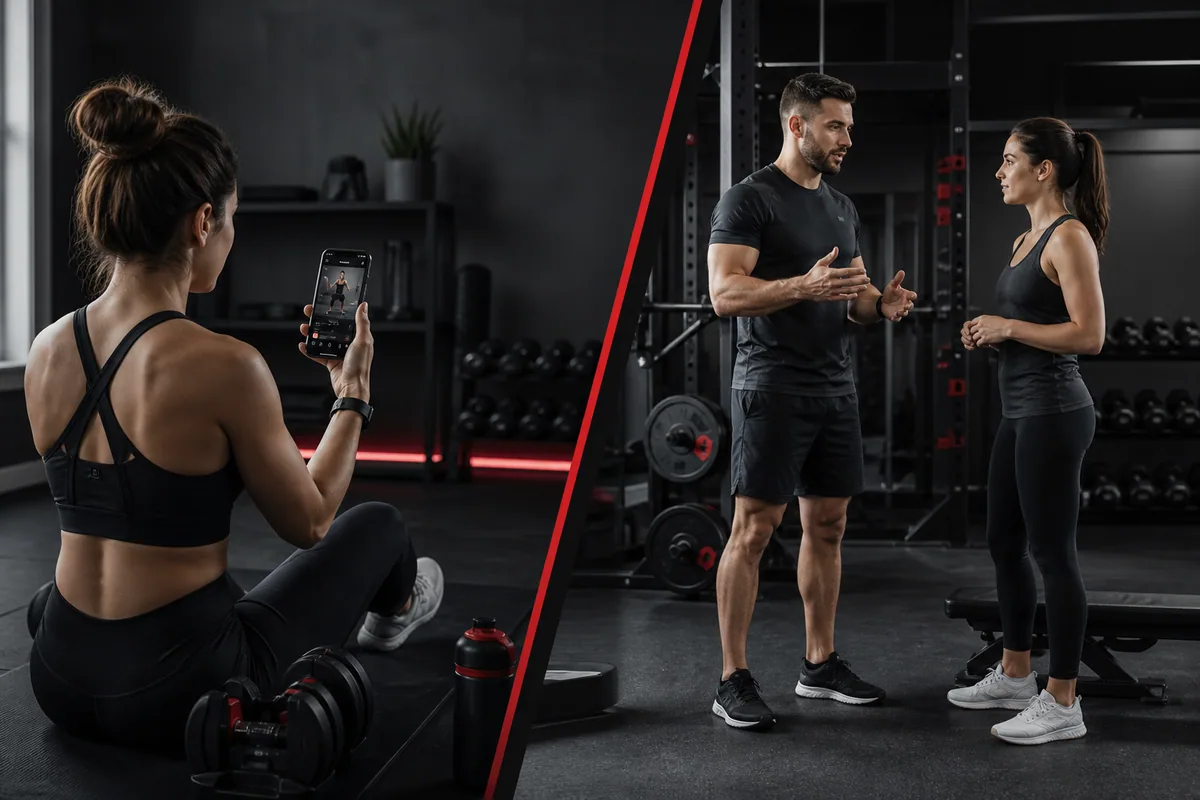
Online personal training is fitness coaching delivered remotely rather than requiring every training session to happen face-to-face with your coach.
Depending on the coaching service, it can include things such as:
- Personalized workout programming
- Exercise instructions
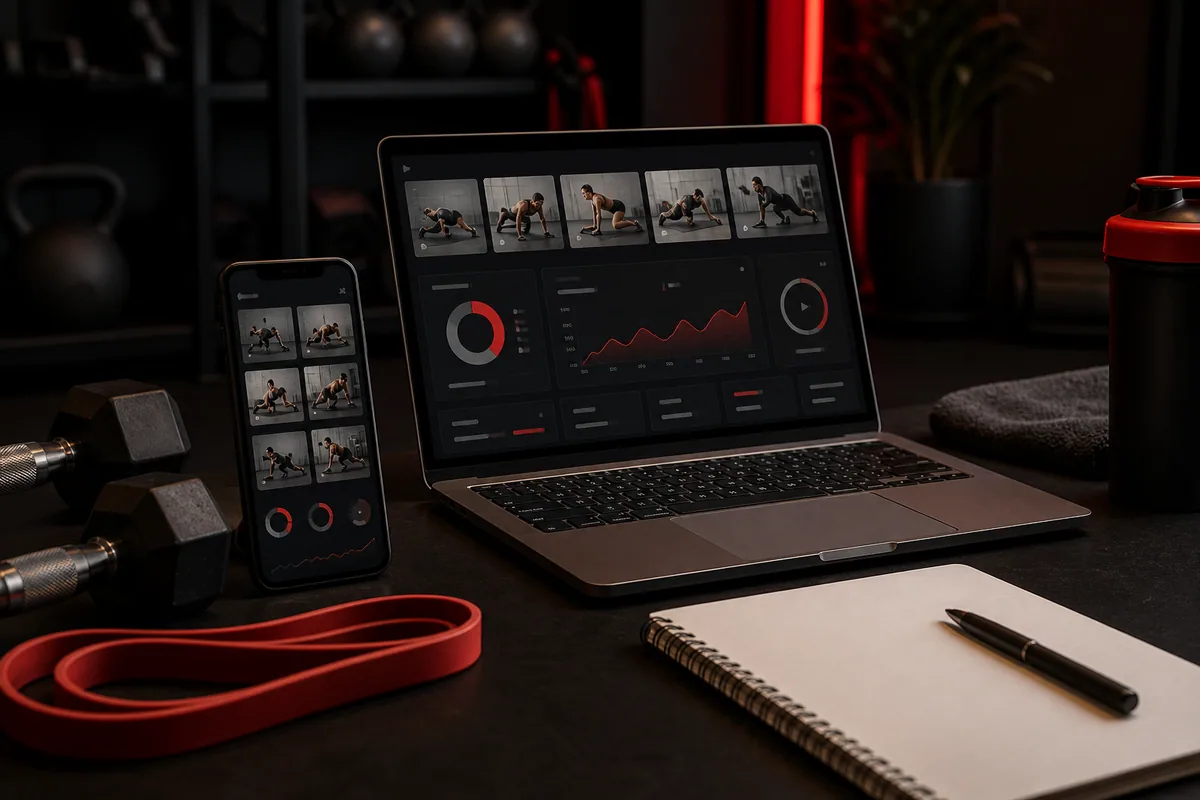
- Progress tracking
- Check-ins
- Accountability
- Program adjustments
- General fitness education
- Communication with your coach
- General nutrition guidance when included
The exact features depend on the coaching package you choose.
Always review what is actually included rather than assuming every online coach offers the same thing.
Step 1: Understanding Your Goals
A coach cannot build a useful program without first understanding what you are trying to accomplish.
Your goals might include:
- Building muscle
- Losing body fat
- Getting stronger
- Improving conditioning
- Becoming more active
- Improving mobility
- Creating a consistent workout routine
- Completing a body transformation
Your goals help determine the direction of your training.
Step 2: Learning About Your Starting Point
Your goals are only half of the equation.
Your program also needs to reflect where you currently are.
That can include information such as:
- Current training experience
- Exercise history
- Available equipment
- Workout location
- Schedule
- Current activity level
- Exercise preferences
- Relevant limitations disclosed during onboarding
Someone who has never trained before should not automatically receive the same program as someone with years of experience.
Personalization starts with understanding the person.
Step 3: Building the Training Program
Once your goals and starting point are understood, your training program can be developed.
That may determine things like:
- Training days
- Exercises
- Sets
- Repetitions
- Training progression
- Cardio
- Mobility work
- Recovery structure
The program should have a reason behind it.
You should not simply receive a random list of exercises.
Do I Need a Gym for Online Coaching?
Not necessarily.
An online program can be designed around the equipment available to you.
That might mean:
- Full commercial gym
- Apartment gym
- Home gym
- Dumbbells
- Resistance bands
- Bodyweight training
- A combination
Your available equipment should be part of the onboarding process.
A program only helps if you can actually perform it.
Step 4: Completing Your Workouts
This is where your responsibility comes in.
Online coaching gives you structure and guidance.
You still have to complete the work.
Unlike an in-person session where your trainer is physically standing next to you, online training requires you to take ownership of following the program.
For some people, that flexibility is exactly what they want.
For others, having somebody physically present during every session may be more appropriate.
Neither approach is automatically better.
Step 5: Tracking Progress
A program should not exist in a vacuum.
Progress tracking helps determine whether the plan is moving you in the right direction.
Depending on your goal and coaching package, tracking may involve things such as:
- Workout completion
- Weights used
- Sets and repetitions
- Measurements
- Body weight
- Progress photos when appropriate
- Cardio performance
- Consistency
- Check-in feedback
The purpose is not to collect numbers just for the sake of collecting numbers.
The information helps show what is happening.
Step 6: Adjusting the Program
Your Week 1 program should not necessarily remain unchanged forever.
As you become stronger or more conditioned, your training should be able to progress.
Adjustments may also be needed if:
- Your schedule changes
- Equipment changes
- An exercise is not working well for you
- Your performance improves
- Your goals change
- Your current program needs progression
This is one of the biggest differences between ongoing coaching and simply downloading a generic workout PDF.
A static workout plan stays the same.
Coaching can respond to the person following it.
How Does Progressive Overload Work Online?
You do not need your coach standing next to you to track progression.
Your workout performance can be recorded over time.
That information can help show that your performance is improving.
Read Progressive Overload Explained for Beginners for a full explanation.
How Do Check-Ins Work?
Check-ins give the coach and client an opportunity to review how things are going.
Topics may include:
- Workout consistency
- Progress
- Challenges
- Schedule changes
- Exercise questions
- Recovery
- Goal progress
The exact frequency and communication included should match the coaching package you purchase.
Do not assume every CCStayFit package includes identical communication.
Review the current package details on the Online Coaching page.
What About Exercise Form?
Online coaching requires a different approach to exercise instruction than having a trainer physically beside you.
Exercise demonstrations, instructions, client feedback, and other remote coaching tools can help you understand the intended movement.
However, if you require constant physical supervision or hands-on assistance during exercise, an in-person professional may be a better fit.
This is one of the factors you should consider when choosing between online and in-person training.
Is Online Training Good for Beginners?
It can be.
Being a beginner does not mean you need to already understand programming.
That is part of the reason people hire coaches.
A beginner-focused online program can help provide:
- Structure
- Exercise selection
- Progression
- Accountability
- Education
- A starting point
But you still need to communicate when you do not understand something.
Do not pretend you know how to perform an exercise because you are embarrassed to ask.
Questions are part of learning.
Who Is Online Personal Training Good For?
Online coaching can make sense if you:
- Want a structured program
- Prefer flexibility in when you train
- Do not need your coach physically present for every repetition
- Want accountability
- Want your progress tracked
- Want programming that can adjust over time
- Already have access to a place to exercise
- Are comfortable communicating remotely
Who May Prefer In-Person Training?
In-person training may make more sense if you:
- Want your trainer physically beside you every session
- Need extensive hands-on instruction
- Are uncomfortable exercising independently
- Prefer appointments that require you to physically meet someone
- Need a level of in-person supervision online coaching cannot provide
We cover this comparison fully in Online Personal Trainer vs. In-Person Trainer: Which Is Right for You?.
Is Online Coaching Just a Workout Plan?
Good online coaching should offer more than emailing you a random routine and disappearing.
The value comes from the ongoing relationship between:
programming + tracking + accountability + adjustment.
The exact amount of each depends on the service and package.
That is why you should always understand what you are purchasing.
What Happens When You Start With CCStayFit?
CCStayFit's onboarding process is designed to gather the information needed to understand your goals, training experience, schedule, available equipment, and starting point.
From there, your coaching experience follows the features included in the package you select.
Current pricing and package information remain centralized on the Online Coaching page so you can always review the latest details.
Start With the Basics
If you are completely new to working out, you may also want to read How to Start Working Out: A Beginner's Guide, How Often Should a Beginner Work Out?, and 7 Common Beginner Workout Mistakes That Can Slow Your Progress.